

Pregnancy brings a long list of physical changes swollen ankles, an aching lower back, hips that feel like they’re constantly working overtime. It’s no surprise that prenatal massage has become one of the most sought-after forms of relief for expecting moms. But pregnancy also comes with real questions about safety: Is it safe at every stage? What’s different about a prenatal session? In this guide, we’ll cover the benefits, the safety basics, and what to expect from a prenatal massage.
What Is Prenatal Massage?
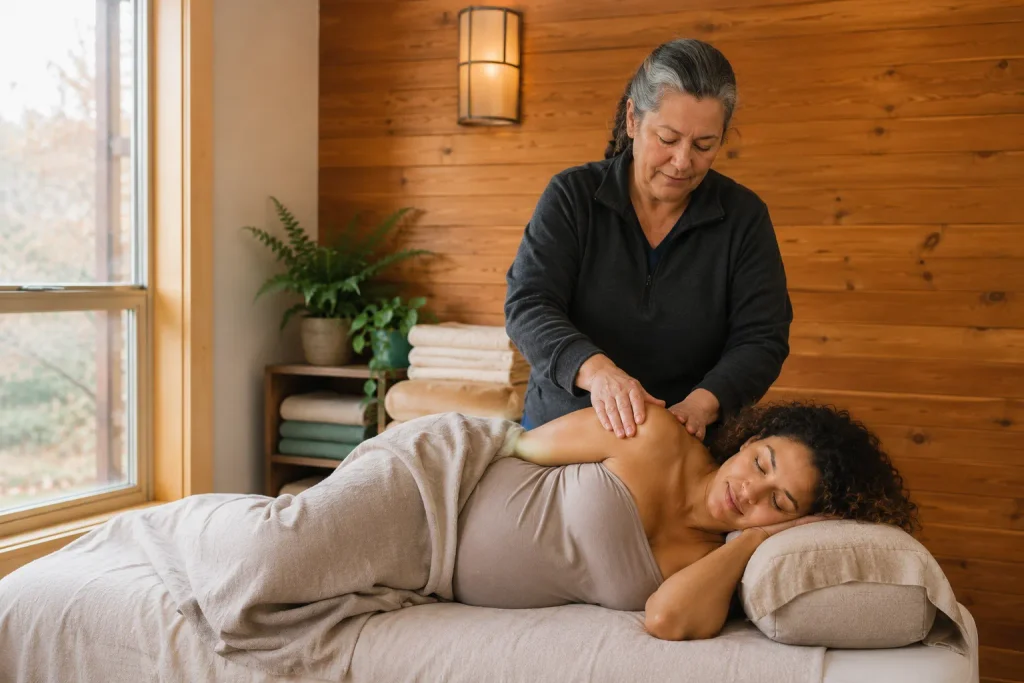
Prenatal massage is a specialized form of massage therapy adapted specifically for the needs of pregnant bodies. It uses techniques similar to Swedish massage gentle, flowing strokes but with modified positioning, lighter pressure in certain areas, and specific precautions to keep both mom and baby safe and comfortable.
Prenatal massage should always be performed by a therapist trained specifically in prenatal techniques, not just a general massage therapist working around a pregnant body without additional training.
Top Prenatal Massage Benefits

Pregnancy puts unique physical and emotional demands on the body, and prenatal massage is designed to address many of them directly.
- Relief from lower back and hip pain. As weight distribution shifts, the lower back and hips often carry extra strain. Targeted, gentle massage may help ease this common discomfort.
- Reduced swelling (edema). Techniques focused on circulation may help reduce fluid buildup in the legs, ankles, and feet, common in the second and third trimesters.
- Better sleep quality. Between physical discomfort and hormonal changes, sleep can be elusive during pregnancy. Massage-induced relaxation may support more restful sleep.
- Reduced stress and anxiety. Prenatal massage has been associated with lower cortisol levels and improved mood, which can be especially valuable during an emotionally intense time.
- Eased muscle tension from postural changes. As the body adapts to a growing belly, new tension patterns often develop in the upper back, shoulders, and neck.
As with all massage during pregnancy, it’s important to check with your OB-GYN or midwife before booking, especially if you have a high-risk pregnancy or other medical concerns.
Is Prenatal Massage Safe? What to Know by Trimester
| Trimester | General Guidance |
| First trimester | Many practitioners wait until after the first trimester; always confirm with your doctor first |
| Second trimester | Often considered the most comfortable time for prenatal massage |
| Third trimester | Safe with proper positioning (typically side-lying); focus areas may shift to accommodate comfort |

Certain conditions such as preeclampsia, high-risk pregnancy, or specific complications may mean massage isn’t recommended. Always get clearance from your healthcare provider before your first prenatal session, especially if this is new to you.
If you’re cleared and ready to book, take the Sommnest quiz to get matched with a licensed therapist trained specifically in prenatal massage.
What to Expect During a Prenatal Massage Session

- Health intake. Your therapist will ask about your trimester, any complications, and areas of discomfort before starting.
- Positioning. Unlike a traditional massage table, prenatal sessions typically use side-lying positioning with supportive pillows, or a specialized table with a belly cutout.
- Modified pressure. Certain areas, like the ankles and specific pressure points, are avoided or approached with extra caution based on prenatal training.
- Focus areas. Expect attention on the lower back, hips, shoulders, and legs the areas most affected by pregnancy-related strain.
- Aftercare. Move slowly when getting up, stay hydrated, and communicate any unusual discomfort to your therapist or doctor.
Sessions are typically shorter than standard massages, often 45–60 minutes, to keep comfort and safety in mind.
Questions to Ask Before Booking a Prenatal Massage
- Are you specifically trained and certified in prenatal massage techniques?
- How do you position clients safely during each trimester?
- What precautions do you take for pregnancy-specific risk factors?
- Do you require medical clearance before the first session?
A qualified prenatal therapist should be able to answer these clearly and confidently hesitation or uncertainty is worth taking seriously.
Frequently Asked Questions
Q1: Is it safe to get a massage during the first trimester?
Many massage therapists prefer to wait until after the first trimester due to higher miscarriage risk during this period, though this isn’t universal. Always check with your OB-GYN or midwife before booking a first-trimester massage.
Q2: What positions are used during a prenatal massage?
Most prenatal massages use side-lying positioning with supportive pillows under the belly, back, and legs. Some spas also offer specialized tables with a cutout for the belly, though side-lying remains the most common and widely recommended approach.
Q3: Can massage help with pregnancy-related sciatica?
Yes, many people find relief from pregnancy-related sciatic discomfort through targeted prenatal massage techniques focused on the lower back and hip area. A therapist trained in prenatal care will know how to approach this safely.
Q4: Are there any risks to prenatal massage?
When performed by a trained prenatal massage therapist, the practice is generally considered safe for most pregnancies. However, certain conditions like preeclampsia, high blood pressure, or a high-risk pregnancy may mean massage isn’t appropriate always consult your healthcare provider first.
Q5: How is prenatal massage different from a regular massage?
Prenatal massage uses modified positioning, lighter pressure in specific areas, and techniques tailored to the physical changes of pregnancy. It requires specialized training beyond standard massage certification to ensure safety for both mom and baby.
Final Thoughts
Prenatal massage can offer real relief during one of the most physically demanding times in a person’s life as long as it’s done safely, by someone properly trained. If you’re ready to book with confidence, take the Sommnest quiz to get matched with a licensed prenatal massage therapist, or
download the Sommnest app to book your session today.