
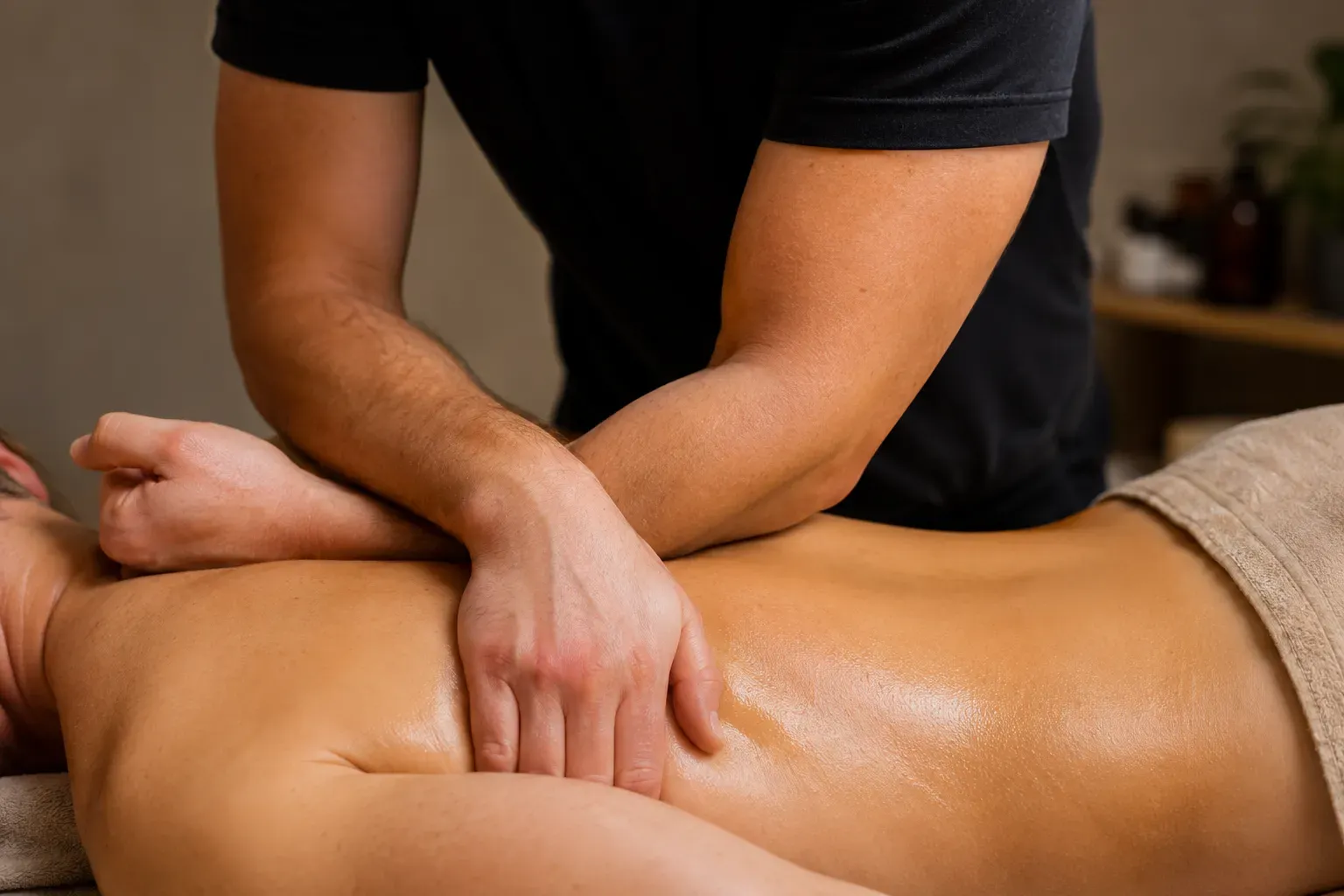
If you’ve been living with tight, achy, or stubborn back pain, you already know that a gentle rubdown isn’t always enough. That’s where deep tissue massage comes in. Unlike lighter techniques, deep tissue massage works into the deeper layers of muscle and connective tissue to target chronic tension at its source. It’s one of the most requested treatments for back pain but it’s also often misunderstood. In this guide, we’ll cover what deep tissue massage actually feels like, when it’s the right choice, and how to know if your back pain will respond to it.
What Is Deep Tissue Massage?
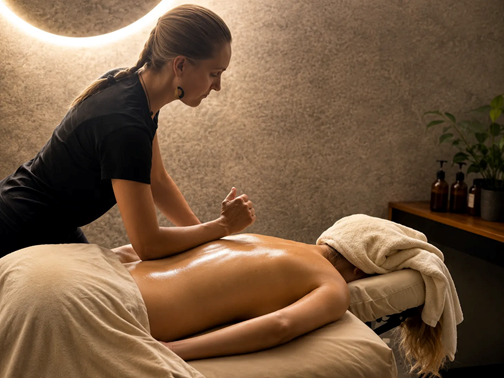
Deep tissue massage is a therapeutic technique that uses firm, targeted pressure and slow strokes to reach deeper muscle layers and fascia (the connective tissue surrounding muscles). It’s designed to release chronic tension, break up adhesions, and improve mobility in areas that feel persistently tight or knotted.
Unlike Swedish massage, which focuses on relaxation, deep tissue massage is treatment-oriented. Therapists often use their forearms, elbows, or knuckles to apply concentrated pressure to specific problem areas most commonly the lower back, upper back, shoulders, and neck.
Why Deep Tissue Massage Helps with Back Pain

Back pain often stems from tight muscles, poor posture, or repetitive strain that builds up over time. Deep tissue massage may help by:
- Releasing muscle adhesions. Bands of rigid, painful tissue (sometimes called knots) can restrict movement and pull on surrounding muscles. Targeted pressure may help break these up.
- Improving blood flow to affected areas. Increased circulation can help deliver oxygen and nutrients to overworked muscles, supporting recovery.
- Reducing inflammation-related stiffness. Many people report feeling looser and more mobile after a session, especially around the lower back and spine.
- Easing tension from poor posture. Desk work and prolonged sitting often create tight hip flexors and upper back tension that radiate into back pain.
- Complementing other treatment. Deep tissue massage is often used alongside physical therapy, chiropractic care, or a doctor’s treatment plan, not as a replacement for it.
Research on massage therapy for musculoskeletal pain is still evolving, but many people experience meaningful relief. Deep tissue massage is not a guaranteed cure, and results vary from person to person.
When Deep Tissue Massage Helps Most
Deep tissue massage tends to work best for:
| Back Pain Type | Why Deep Tissue Helps |
| Chronic muscle tension | Reaches deeper layers that light pressure can’t access |
| Postural strain (desk work) | Loosens tight upper back, neck, and shoulders |
| Old or recurring stiffness | Breaks up long-standing adhesions |
| Muscle knots or trigger points | Targeted pressure directly on the problem area |
| Post-workout soreness | Helps muscles recover and release tension |
If your back pain is caused by a herniated disc, nerve compression, sciatica, or a recent injury, talk to your doctor before booking deep tissue work a gentler technique or a different approach may be more appropriate. Not sure what your body actually needs?
Take the Sommnest quiz to get matched with a licensed therapist who specializes in your specific type of pain.
What to Expect During a Deep Tissue Massage Session

- Consultation. Your therapist will ask where the pain is, how long you’ve had it, and what makes it better or worse.
- Pressure calibration. The session usually starts lighter to warm up the muscles before working deeper.
- Targeted work. Expect slow, firm strokes and sustained pressure on tight areas this can feel intense, sometimes uncomfortable, but shouldn’t be sharply painful.
- Communication throughout. Speak up if pressure feels like too much. A good therapist adjusts in real time.
- Aftercare. Drink water, stretch gently, and expect some soreness for 24–48 hours, similar to how muscles feel after a workout.
Sessions typically run 60–90 minutes, and many people need more than one session to feel lasting relief from chronic pain.
Deep Tissue vs. Swedish Massage for Back Pain
| Feature | Deep Tissue Massage | Swedish Massage |
| Pressure | Firm to intense | Light to medium |
| Best for | Chronic pain, muscle knots | Relaxation, stress, first-timers |
| Feel | Targeted, sometimes uncomfortable | Gentle, flowing |
| Recovery time | Can feel sore 24–48 hrs after | Minimal soreness |
If you’re newer to massage or your pain is mild, Swedish massage may be a gentler starting point. Read our guide on Swedish massage benefits to compare.
Frequently Asked Questions
Q1: Does deep tissue massage hurt?
It can feel intense, especially over very tight areas, but it shouldn’t be sharply or unbearably painful. Some soreness afterward is normal, similar to post-workout muscle fatigue. If a spot feels too painful during the session, tell your therapist so they can ease off.
Q2: How many sessions does it take to relieve back pain?
It varies by person and the severity of the tension. Some people feel looser after one session, while chronic pain often responds better to a series of sessions spaced a week or two apart. Your therapist can help set expectations based on your specific situation.
Q3: Is deep tissue massage safe for everyone?
Most healthy adults can safely receive deep tissue massage, but it’s not recommended for certain conditions like recent injuries, blood clotting disorders, or some spine issues. Always consult your doctor if you have a diagnosed medical condition before booking.
Q4: How is deep tissue massage different from a regular massage?
Regular (Swedish) massage focuses on relaxation using lighter pressure, while deep tissue massage uses firmer, more targeted pressure to reach deeper muscle layers and address chronic tension or pain.
Q5: Can deep tissue massage help with sciatica?
Some people find relief from sciatica-related tension through deep tissue work, particularly around the lower back and glutes. However, sciatica has many causes, so it’s worth talking to a healthcare provider and looking into massage techniques specifically suited for sciatica.
Final Thoughts
Deep tissue massage can be a powerful tool for chronic back pain, but the right approach depends on your body, your pain, and your history. If you’re ready to find a licensed therapist who knows how to work with back pain specifically, take the Sommnest quiz to get matched, or
download the Sommnest app to book your session today.