
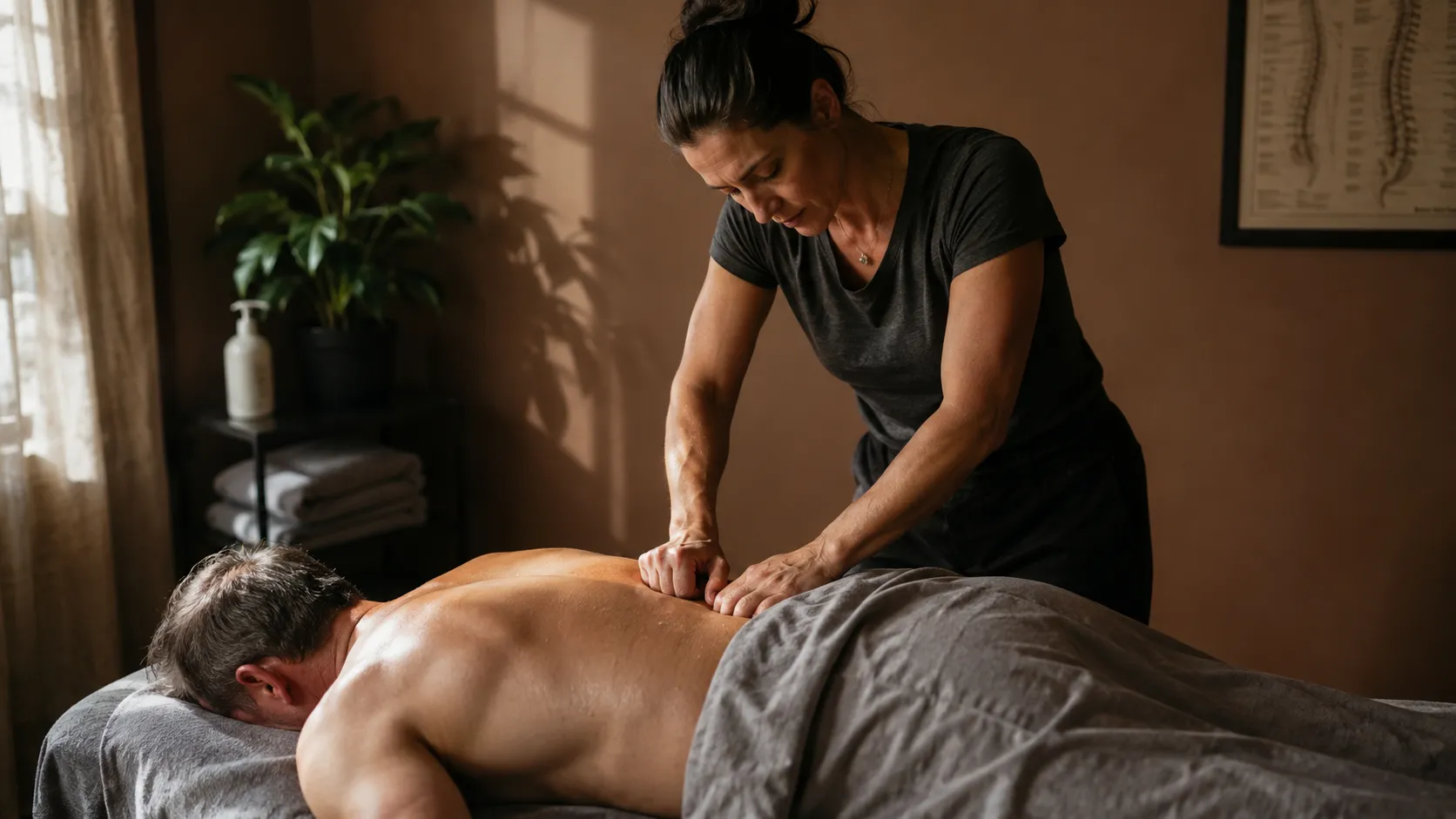
Sciatica pain has a way of hijacking your entire day a sharp, radiating ache that runs from your lower back down through your hip and leg, sometimes all the way to your foot. If you’re searching for relief, you’ve probably come across massage for sciatica pain as an option, but not all techniques work the same way. In this guide, we’ll break down four massage techniques that are actually effective for sciatica, how they work, and when it’s worth seeing a specialist instead of waiting it out.
What Causes Sciatica Pain?
Sciatica happens when the sciatic nerve the longest nerve in your body, running from your lower back through your hips and down each leg becomes compressed or irritated. Common causes include a herniated disc, spinal stenosis, or a tight piriformis muscle pressing on the nerve.
Because the pain often stems from muscular tightness or nerve compression rather than the nerve itself being damaged, targeted massage techniques can sometimes provide meaningful relief by easing the muscles and structures putting pressure on the nerve.
4 Massage Techniques That Actually Ease Sciatica Pain
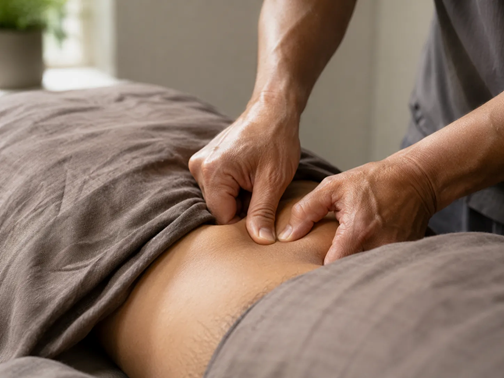
- Deep tissue massage on the lower back and glutes. Firm, targeted pressure can help release chronically tight muscles in the lower back and glute area that often contribute to nerve compression.
- Piriformis release technique. The piriformis muscle sits close to the sciatic nerve, and when it’s tight, it can directly irritate the nerve (sometimes called piriformis syndrome). A therapist trained in this technique applies sustained pressure to release the muscle and reduce nerve pressure.
- Trigger point therapy. This technique targets specific ‘trigger points’ small, hyper-irritable knots in muscle tissue that can refer pain down the leg in a pattern similar to sciatica, even when the nerve itself isn’t the main issue.
- Myofascial release. A slower, sustained-pressure technique that works on the fascia (connective tissue) surrounding muscles, helping to release tension patterns that may be pulling on the lower back and hip area.
Many therapists combine two or more of these techniques within a single session, depending on where your specific tightness and pain patterns show up.
Why These Techniques Work
Sciatica-focused massage techniques share a common goal: reducing pressure on the sciatic nerve by addressing the muscles and tissue around it.
- Reduced muscle compression. Releasing tight muscles (especially the piriformis) can directly ease pressure on the nerve.
- Improved circulation. Better blood flow to the affected area may support healing and reduce inflammation-related discomfort.
- Reduced referred pain. Trigger point work can ease pain patterns that mimic sciatica, even when a tight muscle not nerve compression is the actual cause.
- Better mobility. Loosening the lower back, hips, and glutes can improve range of motion and reduce compensatory strain elsewhere in the body.
Results vary by person, and sciatica has multiple possible causes, so massage may help more with some cases than others.
Finding the Right Therapist for Sciatica
| What to Look For | Why It Matters |
| Experience with sciatica or nerve pain | Ensures they know targeted techniques like piriformis release |
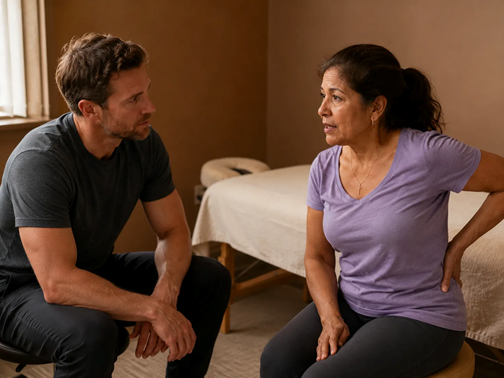
| Willingness to ask about your pain pattern | Helps them customize the session to your specific case |
| Communication during the session | Sciatica pain can be sensitive — pressure needs to be dialed in carefully |
| Comfortable referring out when needed | A good therapist knows when your case needs a doctor, not just massage |
Not every therapist specializes in nerve-related pain. If you’re dealing with sciatica specifically,
take the Sommnest quiz to get matched with a licensed therapist experienced in techniques like piriformis release and trigger point therapy.
When to See a Doctor Instead of (or Before) Getting a Massage
Massage can be a great complement to sciatica care, but it isn’t the right first step for everyone. See a doctor before booking a massage if you experience:
- Numbness, tingling, or weakness that’s getting worse over time
- Loss of bladder or bowel control (seek emergency care immediately)
- Pain following a recent injury or accident
- Sciatica symptoms that haven’t improved after several weeks of conservative care
For most people with mild to moderate sciatica caused by muscle tightness, massage is generally safe but it’s always worth checking with a healthcare provider first if you’re unsure about the underlying cause.
What to Expect During a Sciatica-Focused Massage Session
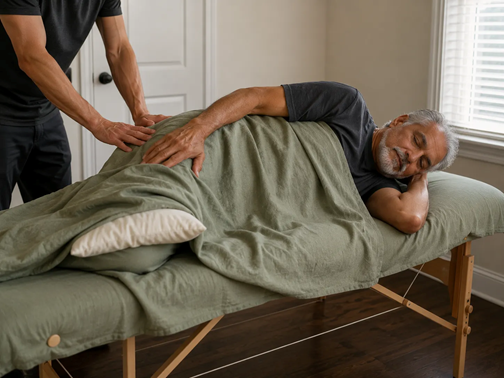
- Intake. Your therapist will ask about your pain pattern where it starts, where it radiates, and what makes it better or worse.
- Positioning. You may be positioned on your side or with pillows supporting your legs to reduce nerve tension during the session.
- Targeted work. Expect focused pressure on the lower back, glutes, and hip area rather than a general full-body massage.
- Gradual pressure. Sessions often start gentler and build up, since sciatica-affected areas can be sensitive.
- Aftercare guidance. Many therapists suggest gentle stretches or movement between sessions to support the results.
Frequently Asked Questions
Q1: Can massage make sciatica worse?
It’s possible if the pressure is too aggressive or applied incorrectly, especially directly over an inflamed nerve. This is why working with a therapist experienced in sciatica-specific techniques matters they know how to work around sensitive areas safely.
Q2: How many massage sessions does it take to feel relief from sciatica?
It varies widely depending on the cause and severity. Some people notice improvement after one or two sessions, while others need a series of sessions spaced a week or two apart alongside other care like stretching or physical therapy.
Q3: Is deep tissue or gentle massage better for sciatica?
It depends on the individual. Many sciatica-focused sessions use a combination gentler techniques near sensitive areas and firmer pressure on surrounding tight muscles like the glutes and lower back.
Q4: Can massage therapy replace physical therapy for sciatica?
No. Massage can complement physical therapy and other treatment, but it isn’t typically a replacement, especially for sciatica caused by a herniated disc or spinal issue. A combined approach often works best.
Q5: What’s the difference between sciatica pain and general back pain?
Sciatica pain typically radiates from the lower back through the hip and down the leg, sometimes with numbness or tingling, while general back pain usually stays localized to the back itself. If your pain travels down your leg, sciatica-specific techniques are likely more effective than a general back massage.
Final Thoughts
Sciatica pain can be frustrating, but the right massage techniques applied by the right therapist may offer real relief. If you’re ready to find someone who specializes in nerve-related pain, take the Sommnest quiz to get matched with a licensed therapist, or
download the Sommnest app to book your session today.