
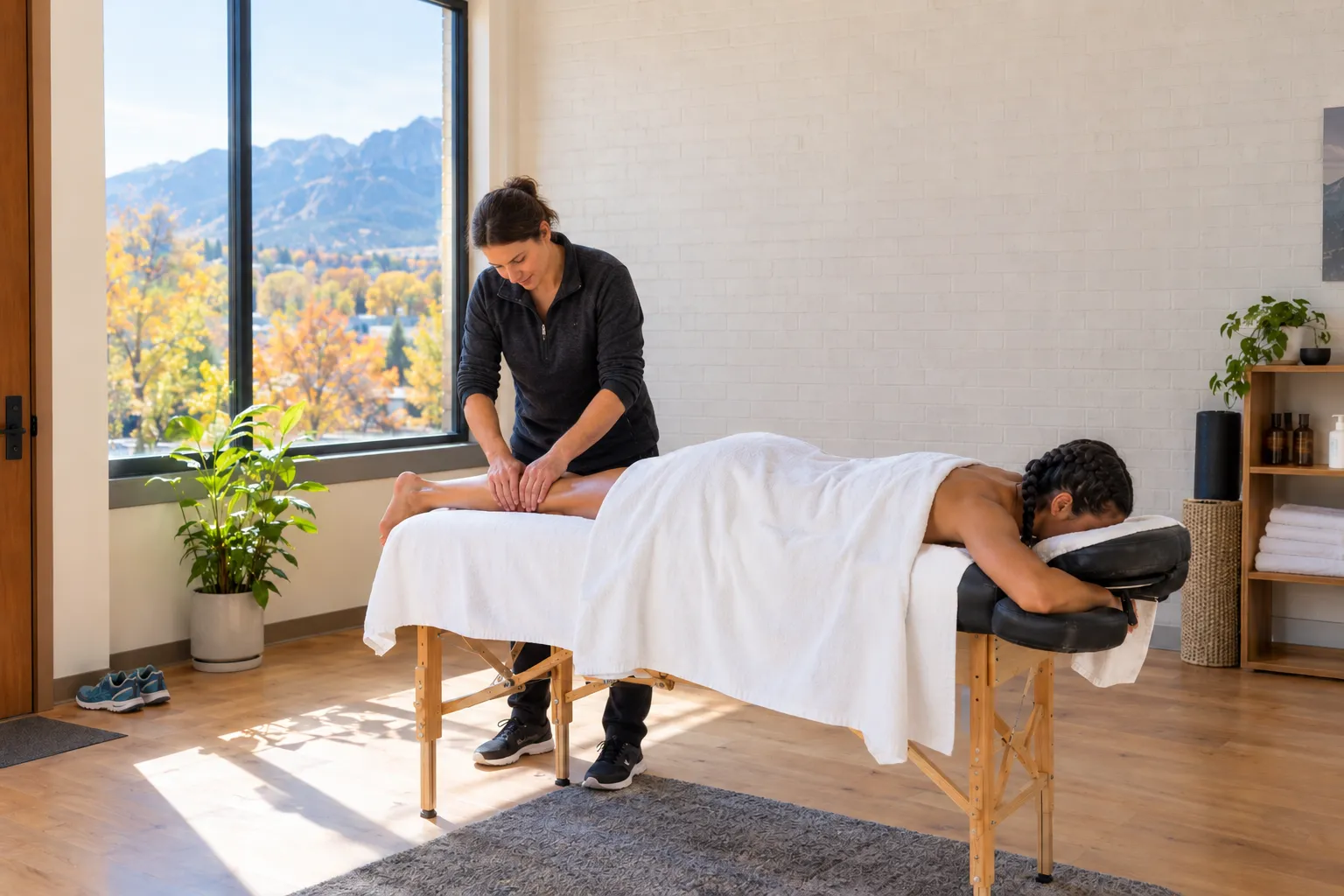
You finished the long run on Sunday. By Tuesday, your calves still feel like wet cement, and the stairs at work have turned into a negotiation. If that sounds familiar, you’ve probably wondered whether sports massage for athletes is worth the time and money, or just a nice way to lie down for an hour.
The honest answer sits in the middle. Research backs it for soreness and fatigue, while the evidence for faster times and fewer injuries is thinner. This guide covers what sports massage is, what the studies show, when to book it, and how to find a licensed therapist who understands your sport.
Quick Answer: Sports massage for athletes is a targeted style of massage that focuses on the muscles your sport uses most. A 2018 meta-analysis found massage reduced muscle soreness and perceived fatigue more than the other recovery methods it compared. Evidence that it improves performance or prevents injury is still limited, so treat it as one tool alongside training, sleep, and mobility work.
What Is Sports Massage and How Is It Different?
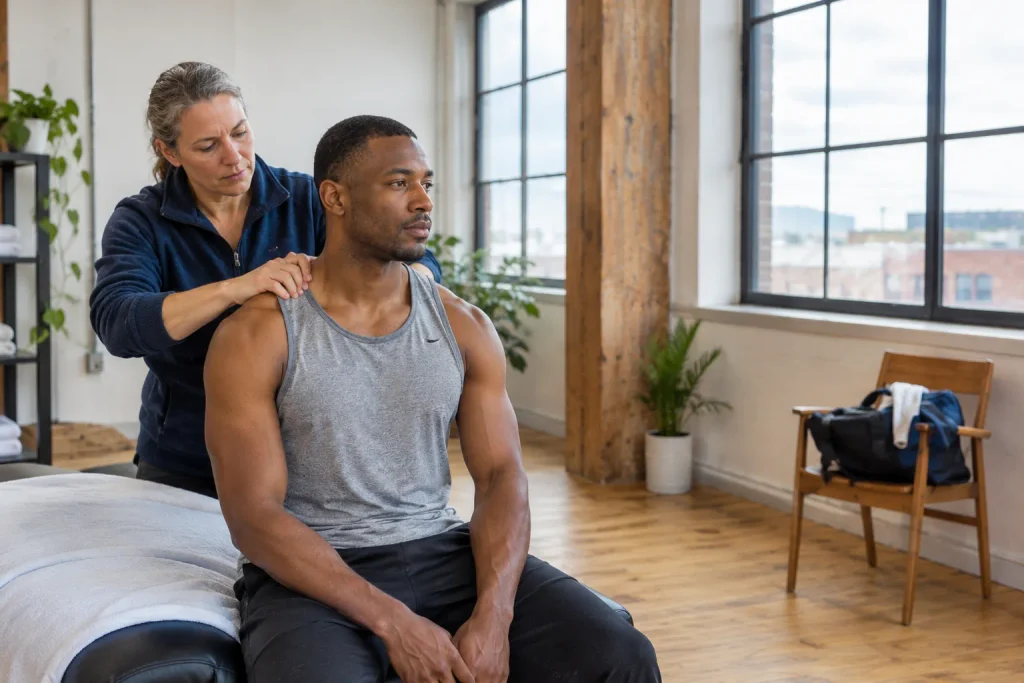
Sports massage is a style of massage built for active people. It combines techniques like deep tissue work, trigger point pressure, and stretching, and it concentrates on the muscle groups your activity loads, such as a runner’s calves or a swimmer’s shoulders.
Swedish massage aims for relaxation, and general deep tissue massage addresses chronic tension across the body. Sports massage borrows the firm techniques of deep tissue and ties them to how you train and move.
| Feature | Sports Massage | Swedish Massage | Deep Tissue Massage |
| Main goal | Recovery and movement support | Relaxation | Chronic tension relief |
| Focus | Muscles your sport loads | Full body | Problem areas, often back and neck |
| Pressure | Medium to firm, varies by timing | Light to medium | Firm to intense |
| Best for | Training blocks, events, soreness | Stress, first-timers | Persistent knots and stiffness |
Does Sports Massage Actually Help You Recover?
Yes, for soreness and fatigue, with some caveats. A 2018 meta-analysis of 99 studies on post-exercise recovery found massage had the largest effect on delayed onset muscle soreness (DOMS) and perceived fatigue of the techniques compared, with soreness benefits reported up to 96 hours after exercise Dupuy et al., Frontiers in Physiology .
The caveats matter:
- Participants can’t be blinded to massage, so the authors couldn’t rule out a placebo effect.
- The review didn’t evaluate performance outcomes.
- It examined a single recovery session, not a long-term program.
An earlier 2005 review in the Journal of Sports Medicine and Physical Fitness took a similarly careful line. It noted a positive trend for recovery and performance but called for better-designed studies before drawing firm conclusions.
Can Sports Massage Improve Performance or Prevent Injuries?
Possibly in indirect ways, but the research doesn’t prove it. Less soreness and fatigue can help you train more consistently, and a therapist who works your muscles regularly may notice a tight calf or a stiff hip before it becomes a problem.
Picture a recreational runner in a 12-week half marathon block. She books a session every two weeks, plus one in the week after the race.
The massage doesn’t make her faster. It may help her feel fresher for the next hard workout, and that’s where the value shows up.
When Should Athletes Get a Sports Massage?
Timing changes the technique. Sessions before an event tend to be lighter and quicker, while recovery and maintenance sessions can go deeper.
| When | Typical Approach | Why It Helps |
| Before an event | Lighter, brisk work; many therapists avoid deep pressure in the 24 to 48 hours before competing | Warms muscles up without leaving them tender |
| After an event | Gentle at first, deeper once soreness settles | Supports recovery from hard efforts |
| During training | Medium to firm, every few weeks | Manages tension that builds across a training block |
| Injury recovery | Targeted, alongside rehab | Eases tension in surrounding muscles while you rebuild |
If you’re managing an injury, see a doctor or physical therapist for a diagnosis first. Massage can complement rehab, but it can’t replace it. Certain conditions, such as blood clots or recent fractures, need medical clearance before any massage.
What Happens During a Sports Massage Session?
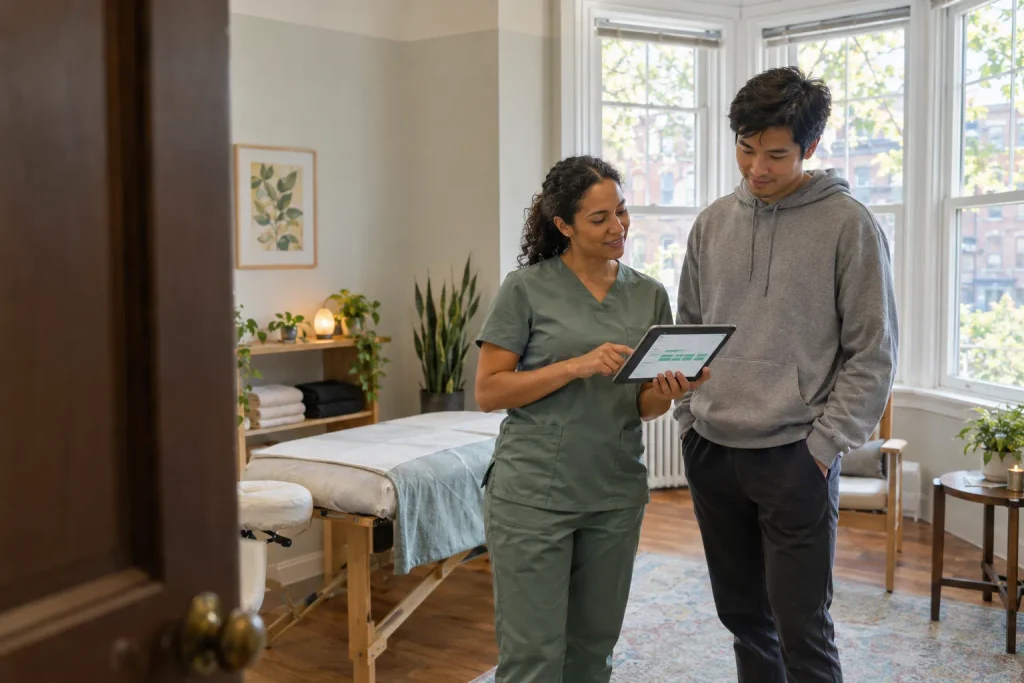
Expect a conversation before anything else. Your therapist will ask about your sport, training schedule, upcoming events, and sore spots.
- Intake: training load, past injuries, and what you want from the session.
- Focused work: firm pressure, trigger point holds, and sometimes assisted stretching on the muscles you use most.
- Check-ins: pressure should feel intense but tolerable, never sharp. Speak up if it crosses that line.
- Aftercare: drink water, walk gently, and expect mild tenderness for a day or so, similar to a tough workout.
A focused session on one or two areas can be shorter than a full-body hour, so tell your therapist what to prioritize.
How Do You Find the Right Sports Massage Therapist?
Look for a licensed therapist with experience in your sport or training style. A marathoner and a powerlifter load their bodies differently, and a good therapist will ask about it. Questions worth asking:
- Do you work with athletes in my sport?
- How do you adjust pressure before and after events?
- Can you work alongside my coach or physical therapist?
Sommnest matches you by goals and condition, and every therapist is licensed and vetted. Take the Sommnest quiz to get matched, or read more massage guides on the Sommnest blog.
Frequently Asked Questions
How often should athletes get a sports massage?
It depends on training load and budget. Every two to four weeks is a common starting point during heavy training, and monthly or less often works for maintenance. Your therapist can adjust based on how your body responds.
Should I get a massage before or after a race?
Both can work. Many people choose a lighter session a few days before and a gentler one after, then deeper work once soreness settles. Avoid trying new, deep techniques right before you compete.
Does sports massage hurt?
Firm pressure can feel intense on tight muscles, but sharp pain isn’t the goal. Mild soreness for a day or two is normal. Tell your therapist if anything feels wrong.
Do I need to be a competitive athlete to get one?
No. Weekend runners, gym regulars, and recreational cyclists all use sports massage. If you train regularly and feel the strain, it may be useful.
Can sports massage help a nagging injury?
It may ease tension in the muscles around an injury, but it doesn’t diagnose or treat the injury itself. See a doctor or physical therapist first, and use massage alongside rehab.
Final Thoughts
Sports massage for athletes is best understood as a recovery tool, not a shortcut. The research supports it for easing soreness and fatigue, while the case for better performance and fewer injuries remains unproven. Timing, communication, and a therapist who understands your sport matter most.
This article is educational and isn’t medical advice, so check with your doctor if you have an injury or medical condition.
Ready to try it? Take the Sommnest quiz to get matched with a licensed therapist, or download the Sommnest app on the App Store or Google Play when you’re ready to book.