
Anxiety doesn’t just affect your mind it steals your sleep, tenses your muscles, and floods your body with stress hormones that leave you exhausted yet wired. If you’ve been searching for a natural, drug-free way to break that cycle, massage therapy may be one of the most powerful tools you’re not using.
From Swedish relaxation sessions to targeted reflexology, massage for anxiety is backed by a growing body of clinical research and the results are impressive. In this guide, we’ll walk you through the science, the best massage types for anxiety relief, practical tips, and how to build massage into a routine that actually works.
What Happens in Your Body During Anxiety?
When anxiety strikes, your brain activates the “fight or flight” response, flooding your body with cortisol and adrenaline. These stress hormones increase heart rate, tighten muscles, disrupt breathing, and make it almost impossible to wind down let alone sleep.
Over time, chronically elevated cortisol wears down your immune system, disrupts sleep cycles, and can lead to serious mental and physical health consequences. This is where massage therapy steps in as a direct, physiological counter-measure.
The Science: How Massage Reduces Anxiety
Massage therapy works on anxiety through several well-documented biological mechanisms:
- Cortisol Reduction: Research shows regular massage sessions can significantly lower cortisol levels, directly reducing the physical symptoms of anxiety.
- Serotonin & Dopamine Boost: A one-hour massage lowers cortisol while simultaneously releasing serotonin the neurotransmitter responsible for mood stability and feelings of well-being.
- Parasympathetic Activation: Studies show that just 10 minutes of massage creates significant increases in heart rate variability, signaling that the parasympathetic (“rest and digest”) nervous system has been activated.
- Endorphin Release: Massage releases the body’s natural painkillers, which reduce physical tension and contribute to a sense of calm.
- Brainwave Changes: Functional brain imaging studies show massage produces changes in the amygdala and hypothalamus areas governing emotional regulation and stress response.
A meta-analysis of 37 massage therapy studies found that reductions in trait anxiety and depression were among massage therapy’s largest effects, with a course of treatment delivering benefits comparable in magnitude to psychotherapy.
Best Types of Massage for Anxiety Relief
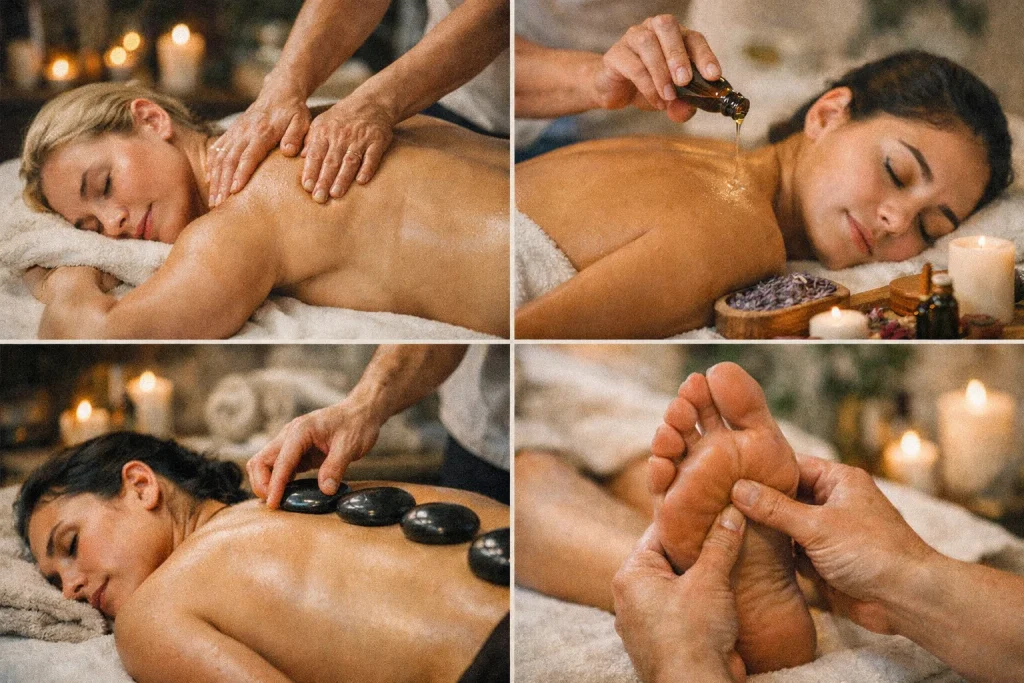
Not all massage is created equal when it comes to anxiety. Here’s a breakdown of the most effective types:
| Massage Type | Best For | Session Length | Anxiety Benefit |
| Swedish | General stress relief | 60–90 min | High – promotes full-body relaxation |
| Deep Tissue | Chronic muscle tension | 60–90 min | Moderate – releases physical stress |
| Aromatherapy | Emotional anxiety | 60 min | High – lavender & chamomile calm nerves |
| Hot Stone | Tension & poor sleep | 60–90 min | High – deeply soothes nervous system |
| Reflexology | Targeted anxiety points | 30–60 min | Moderate – stimulates calming pressure points |
| Chair Massage | Quick stress relief | 10–15 min | Moderate – great for daily practice |
Massage and Sleep: A Powerful Connection
Anxiety and poor sleep feed each other in a vicious cycle anxiety makes it harder to sleep, and sleep deprivation amplifies anxiety. Massage therapy breaks this loop on both fronts.
Research has demonstrated that people who received a 30-minute massage twice a week for five weeks reported significant decreases in pain and fewer sleep disturbances. Massage has been shown to improve sleep patterns across all ages from children to adults dealing with insomnia, fibromyalgia, and other chronic conditions.
At Sommnest, we believe quality sleep is the foundation of mental wellness. If you’re curious about how your current habits are affecting your rest, take our personalized sleep quiz to identify the factors holding you back.
How Often Should You Get a Massage for Anxiety?
Frequency matters. Here’s a practical guide based on your anxiety level:
- Mild to Moderate Anxiety: Bi-weekly or monthly sessions are a good starting point for general stress management and prevention.
- Moderate to High Anxiety: Weekly sessions are often recommended, particularly when starting out, to build a cumulative physiological effect.
- Maintenance: Once anxiety is better managed, monthly massages can help sustain the benefits and prevent relapse.
Even short sessions matter. Studies have shown that physiological and psychological changes occur after just 10–15 minute chair massages meaning you don’t need a full hour to feel the benefits.
Combining Massage with Other Anxiety Management Strategies
Massage is most effective when used as part of a holistic wellness routine. Consider pairing it with:
- Mindfulness meditation and deep breathing exercises
- Regular physical activity such as yoga or walking
- Cognitive Behavioral Therapy (CBT) for long-term anxiety management
- Aromatherapy (lavender or chamomile) during massage for enhanced calming effects
- Consistent sleep hygiene practices including a calming bedtime routine
Want to understand more about the sleep-anxiety connection and how Sommnest approaches whole-body wellness? Read our story to learn about our mission to help you rest, recover, and thrive.
At-Home Massage Techniques for Anxiety Relief
Professional sessions are ideal, but you can also practice self-massage between appointments:
- Scalp Massage: Use your fingertips in slow circular motions across your scalp for 3–5 minutes. This is especially effective before bed.
- Neck & Shoulder Release: Apply gentle pressure with your fingers to the base of your skull and along the tops of your shoulders where tension accumulates.
- Hand Massage: Research from a 2021 Mayo Clinic study found that a 15-minute hand massage reduced anxiety levels in pre-surgical patients a technique easily replicated at home.
- Foot Reflexology: Apply firm pressure to the arch and heel of each foot to stimulate calming reflex points connected to the nervous system.
Who Can Benefit Most from Massage for Anxiety?
While massage therapy can benefit almost anyone experiencing stress or anxiety, research shows particular promise for:
- Adults with generalized anxiety disorder (GAD)
- People experiencing work-related stress and burnout
- Individuals with chronic pain whose anxiety is compounded by physical discomfort
- Those dealing with prenatal anxiety or postpartum stress
- Cancer patients managing treatment-related anxiety and emotional distress
- People with insomnia rooted in anxiety or overactive stress response
Important Considerations Before Starting
Massage therapy is safe for most people, but there are situations where you should consult a doctor first:
- Recent heart attack, bleeding disorders, or blood-thinning medications
- Recent blood clots or deep vein thrombosis
- Open wounds, severe burns, or healing fractures
- Active tumors or cancer where direct massage may be contraindicated
Always communicate with your massage therapist about your anxiety symptoms and any health conditions. A skilled therapist will tailor the session to your specific needs.
Frequently Asked Questions
Q1: Can massage therapy replace medication or therapy for anxiety?
Massage is a powerful complementary tool, not a replacement for professional mental health treatment. It works best alongside therapy, medication (if prescribed), and healthy lifestyle practices. Always consult your healthcare provider before making changes to your treatment plan.
Q2: How quickly will I feel anxiety relief after a massage?
Many people experience immediate reductions in heart rate and muscle tension after a single session. Research confirms measurable cortisol reductions after just one massage. However, sustained anxiety relief builds over multiple sessions typically 3–6 sessions before significant long-term improvements are felt.
Q3: What is the best massage type for anxiety and sleep problems?
Swedish massage and aromatherapy massage are most widely recommended for anxiety combined with sleep issues. Both activate the parasympathetic nervous system, lower cortisol, and promote the deep relaxation needed for restful sleep. Hot stone massage is also highly effective for tension-related insomnia.
Q4: Is self-massage effective for anxiety relief?
Yes studies confirm that even brief self-massage techniques (such as hand or scalp massage) produce measurable reductions in anxiety. While professional sessions offer deeper benefits, consistent self-massage practice between appointments can meaningfully extend your results.
Q5: How does massage for anxiety connect to better sleep?
Massage directly addresses the physiological drivers of sleep disruption elevated cortisol, muscle tension, and an overactive nervous system. By calming these responses, massage helps your body transition into the relaxed state needed for deep, restorative sleep. Regular sessions can help break the anxiety-insomnia cycle for good.
Final Thoughts
Massage for anxiety is far more than a luxury it’s a clinically supported, whole-body intervention that lowers stress hormones, activates your relaxation response, boosts mood-regulating neurotransmitters, and improves sleep quality. Whether you book a professional Swedish massage or spend 10 minutes massaging your own hands before bed, the science is clear: touch heals.
At Sommnest, everything we do is rooted in helping you sleep better and feel better.
Take the first step toward calmer nights and clearer mornings. Discover your personalized sleep profile with our quiz →